New Zealand’s general election is scheduled for Saturday 7 November. Its international significance lies partly in what follows: the formation of a government able to make choices within a network of trade agreements, institutions and obligations. Before treating a change in votes as a change in foreign policy, it is necessary to establish who can govern and what that government has actually committed to do. [1][2]
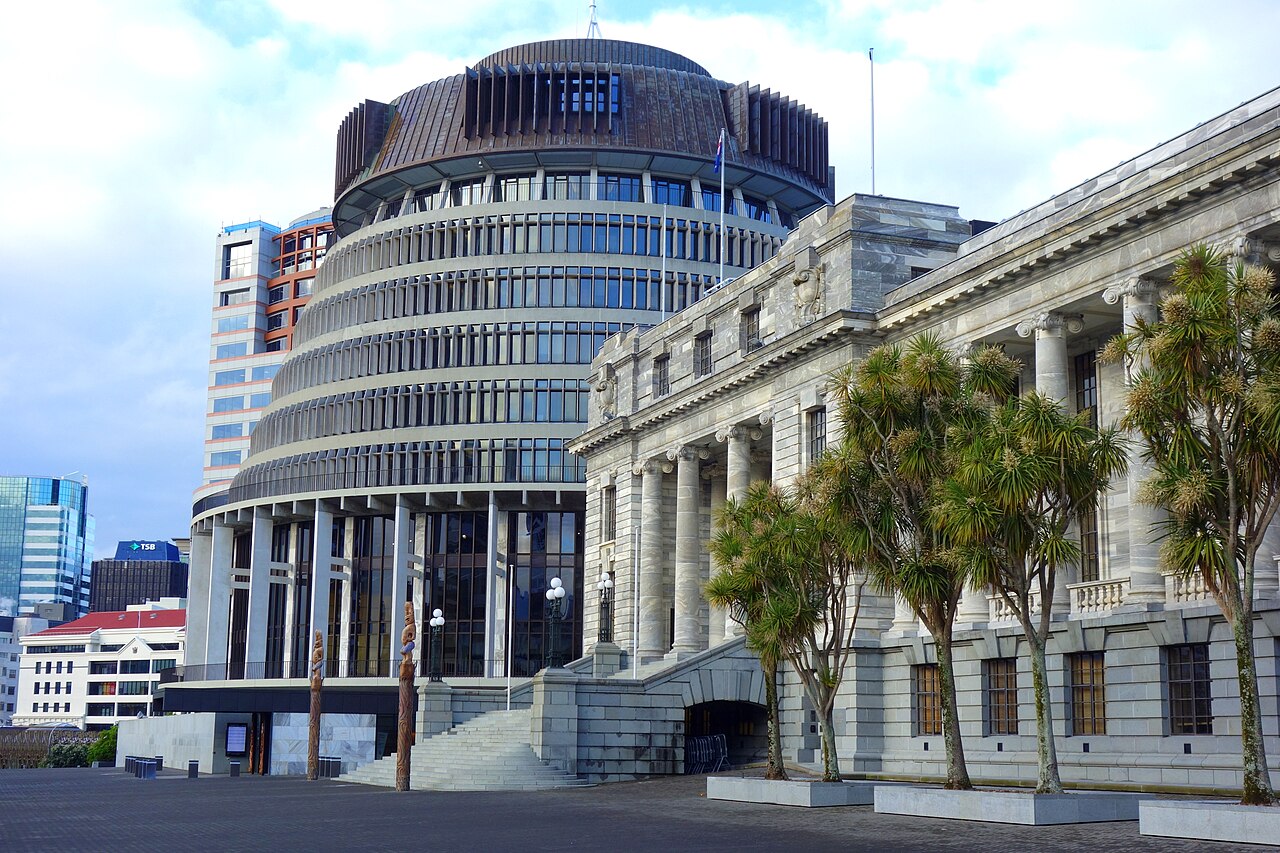
The development
Voters have a party vote and an electorate vote. Government formation under mixed-member proportional representation may involve negotiations between parties. The Cabinet Office’s September guidance identifies confidence in the House of Representatives as the basis for appointing a government; the parties negotiate the arrangement. [1][2]
Preliminary results will appear progressively after voting ends on 7 November; official results are expected on 27 November. Government formation has no fixed date, while Parliament must meet by 14 January 2027. Those are distinct milestones, rather than a prediction of how long negotiations will last. [2][3]
Why it matters
The choices available to that ministry will be shaped by relationships already in place. MFAT identifies China as New Zealand’s largest trading partner, with two-way trade exceeding NZ$41 billion in the year ending September 2025. That is a dated measure of commercial importance. It does not, by itself, show that Beijing can determine a New Zealand policy decision. Understanding influence requires evidence about alternatives, costs and behaviour. [4]
New Zealand is also a founding member of the Comprehensive and Progressive Agreement for Trans-Pacific Partnership. Britain’s accession protocol entered into force on 15 December 2024. Such arrangements provide institutional routes for cooperation across several relationships. Their usefulness depends on whether businesses and governments can make practical use of the access they create. Membership alone cannot establish how much political freedom a country has gained. [5]
The vote is one stage in the decision
- 2026
7 November
Polling day; preliminary results follow the close of voting.
- 2026
27 November
Official results are expected, subject to the electoral process.
- 2027
By 14 January
Parliament must meet. The opening may be brought forward.
Parties establish who can command confidence. A government may be formed before the formal timetable is complete.
What to watch
First, distinguish results from government formation. Follow official counts and any published coalition or support agreements. A campaign statement, a negotiation report and an agreed government programme are different kinds of evidence.
Second, compare commitments with the means to carry them out. Proposals concerning trade diversification, Pacific diplomacy or security cooperation should be examined alongside budgets, responsible ministers and implementation schedules. The relevant test is whether a government creates usable options, rather than simply adding more partnerships to a list.
Third, follow the transition itself. Cabinet Office guidance calls for restraint on significant new decisions while the political situation is unresolved. Continuity during that period should be assessed in its constitutional context. [2]
A useful briefing after the election would return to those commitments and identify what has changed. It should also ask whose interests are represented: exporters and workers, communities affected by regional policy, and people whose priorities are less visible in diplomatic announcements.
The wider argument
An English School reading asks how diplomacy and shared rules help smaller states exercise influence within an unequal distribution of power. [6] Domestic confidence establishes who can speak for New Zealand; the authority of that voice abroad also rests on relationships and recognised commitments. For Lines of Influence, the question is how a government can develop alternatives while sustaining cooperation others find dependable. The SDG test concerns the people those arrangements serve: whose opportunities expand, whose burdens increase and how either change can be demonstrated.
Sources & notes
- New Zealand Government, Vote in a general election or referendum, updated 21 September 2026; accessed 2 November 2026 ↗Back to the briefing ↑
- New Zealand Cabinet Office, CO (26) 5: Constitutional Procedures after the Election, 25 September 2026; accessed 2 November 2026 ↗Back to the briefing ↑
- New Zealand Electoral Commission, election results publication timetable (undated 2026 election page); accessed 2 November 2026 ↗Back to the briefing ↑
- New Zealand MFAT, New Zealand–China Free Trade Agreement overview; trade period year ending September 2025 (undated page); accessed 2 November 2026 ↗Back to the briefing ↑
- New Zealand MFAT, CPTPP accession, including UK entry on 15 December 2024 (undated page); accessed 2 November 2026 ↗Back to the briefing ↑
- Barry Buzan, From International to World Society? (2004), introductory excerpt: international society, common rules and institutions; Cambridge University Press. Analytical framework, accessed 2 November 2026 ↗Back to the briefing ↑
This briefing separates reported developments and official positions from interpretation and questions to watch. Prepared with AI assistance. Read our editorial approach.