On 22 September 2024, the United Nations adopted the Pact for the Future, with annexes on digital cooperation and future generations. A day later, Britain’s foreign secretary urged governments to rebuild confidence in multilateralism. The sequence captured a familiar diplomatic predicament: states could agree that international cooperation needed repair while remaining divided over the wars and inequalities making that repair urgent. For Britain, the question was unusually sharp. A permanent Security Council seat confers exceptional access, yet neither a veto nor an eloquent speech can compel another government to protect civilians, finance adaptation or accept institutional reform. The record from Glasgow’s climate negotiations to Gaza’s devastation shows both the continuing value of diplomacy and the danger of mistaking agreement for accomplishment. [1]
The society beneath the institutions
An English School account starts from the proposition that states inhabit an international society. They compete for power, but also recognise practices through which coexistence becomes possible: diplomacy, international law, sovereignty and a special managerial role for great powers. The United Nations is one expression of this society. Its difficulties do not mean that all common rules have disappeared. They reveal conflicts over which rules take priority, who interprets them and how much governments will sacrifice to uphold them.
The distinction between order and justice matters here. A pluralist approach gives weight to coexistence among states with different values, accepting limited agreement as preferable to unrestrained conflict. A solidarist approach asks whether international society also owes enforceable protection to individuals. Britain routinely appeals to both. It defends sovereign independence and argues for humanitarian protection, but encounters hard choices when its allies, strategic partnerships or financial priorities obstruct those principles.
Success therefore needs several tests. Did diplomacy establish an accepted rule or a functioning process? Did it alter incentives or allocate resources? Did those changes improve the conditions of people exposed to war or climate harm? The first question concerns institutional order, the second practical influence, the third human consequences. Answers can diverge. Britain may help achieve a useful negotiation while falling short of the wider outcome it invokes to justify participation.
Where international society does its work
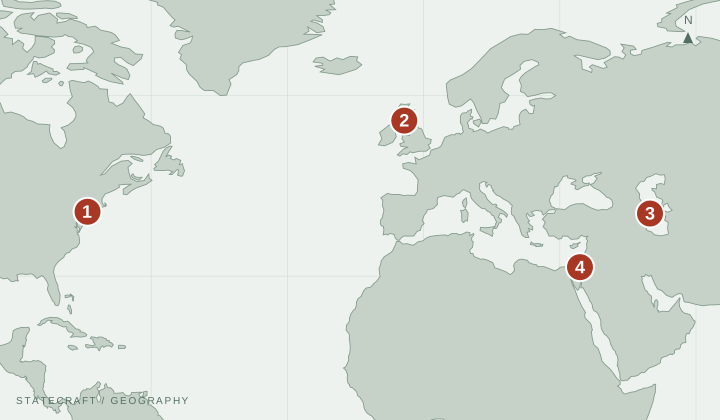
- New York
The United Nations: representation, resolutions and the limits of enforcement.
- Glasgow
COP26 in 2021: Britain’s presidency brokers a negotiated climate pact.
- Baku
COP29 in 2024: a new climate-finance bargain and contested adequacy.
- Gaza
Civilian protection and the credibility of universal rules.
Glasgow, November 2021: a presidency earns its limits
COP26 offered Britain a direct organising role. The Glasgow Climate Pact called for movement away from unabated coal power through a phasedown and for the removal of inefficient fossil-fuel subsidies. These formulations mattered because they placed the underlying sources of emissions inside the negotiated climate text. Their qualifications mattered equally: the agreement did not require the elimination of all coal use or every fossil-fuel subsidy. The presidency secured a shared direction while accepting language that left considerable national discretion. [2]
That bargain illustrates a basic diplomatic mechanism. A chair cannot simply announce the most ambitious outcome and make it binding on reluctant participants. It must identify language that governments can accept, assemble enough support to protect it and judge whether a weaker agreement is preferable to collapse. For Britain, accepting compromise preserved a platform on which later negotiations and domestic campaigners could build. The cost was a gap between the urgency of the climate problem and the strength of the collective instruction.
Glasgow also completed important elements of the Paris Agreement’s operating rules, including arrangements for international carbon-market cooperation. This was less conspicuous than the argument over coal but potentially consequential: common accounting and reporting procedures help distinguish comparable commitments from incompatible claims. UN Climate Change’s own account records this institutional work. It establishes a negotiated framework, however, rather than proving that subsequent projects delivered additional emissions reductions. [3]
The British achievement was thus partly procedural and partly directional. Both deserve credit, provided that neither becomes a substitute for measurement. A defensible assessment would follow national emissions, the quality of carbon accounting and access to finance after the presidency ended. It would also resist assigning the entire settlement to London. Other governments negotiated the concessions; vulnerable countries supplied urgency and political pressure. Convening power is exercised through their agency, not in place of it.
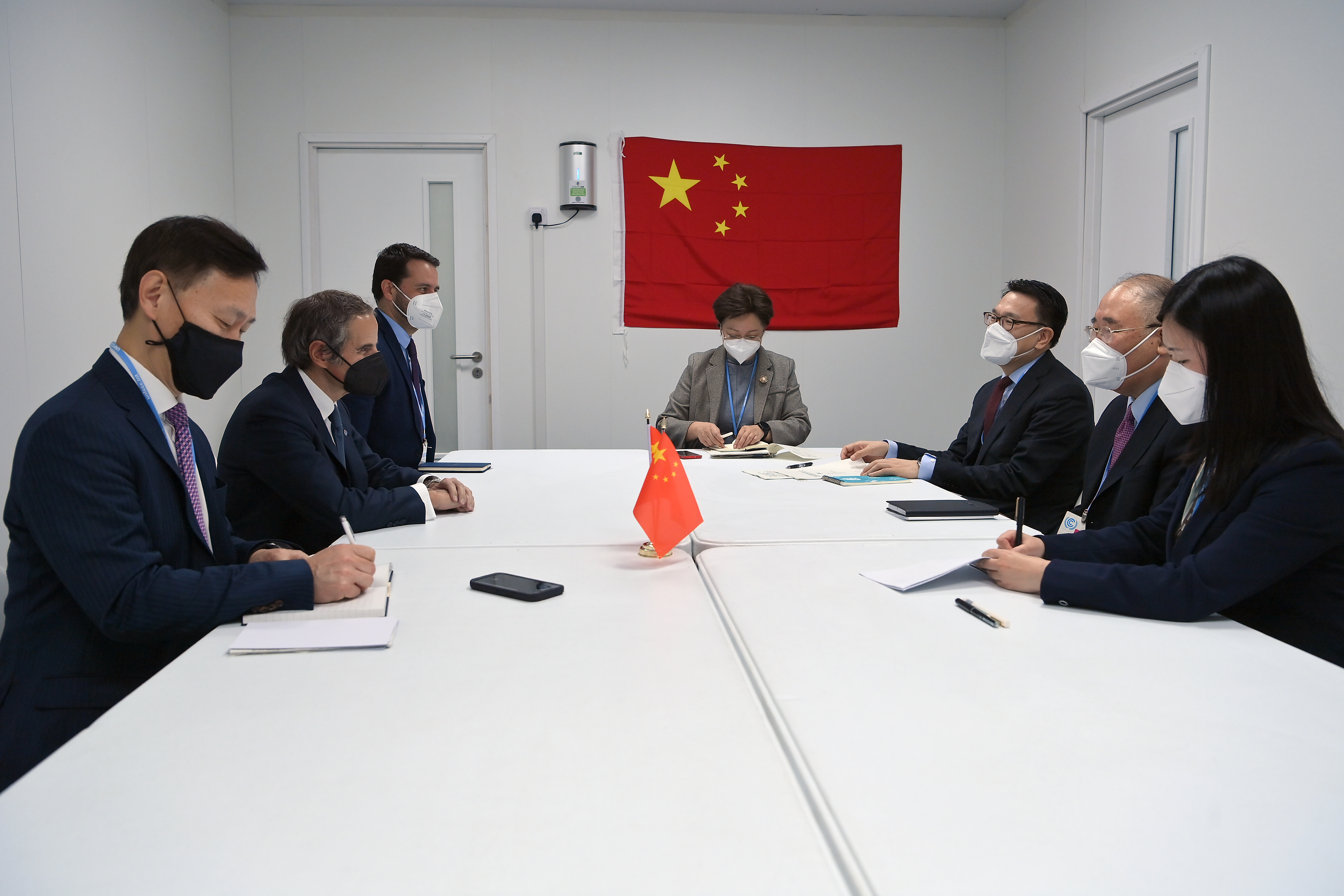
A negotiation in the COP26 room
Gaza, 2023–24: the credibility of equal concern
The war following Hamas’s attacks on 7 October 2023 subjected British claims about international law to another test. On 27 October, Britain abstained on the General Assembly’s Gaza resolution. Its explanation supported civilian protection, humanitarian access and hostage release, but objected to the text’s failure explicitly to condemn Hamas’s terrorist attacks. This was a documented choice about the balance of a resolution, not an absence of a British humanitarian position. It nevertheless placed London at a distance from governments prioritising an immediate collective demand to halt the violence. [6]
In December, Britain supported Security Council Resolution 2720 on aid access. Its published explanation described the resolution as a means to increase assistance reaching Gaza. The distinction between authorising or organising humanitarian action and ensuring access on the ground remained decisive. Diplomats could negotiate a UN mechanism; border access, operational security and the conduct of the parties still determined whether supplies reached civilians. The British vote demonstrated support for the mechanism, rather than proving its adequacy. [7]
On 25 March 2024, the Council adopted Resolution 2728, demanding an immediate ceasefire for Ramadan leading to a lasting sustainable ceasefire, alongside the immediate and unconditional release of hostages. Fourteen members supported it, with the United States abstaining. Britain was among those voting in favour. The text represented a more explicit collective position on stopping the fighting, but its adoption could not itself supply the political will or practical arrangements for implementation. [8]
Here the accusation of inconsistency had analytical force, even without assuming that every conflict required identical policy. Britain could reasonably distinguish the circumstances of Ukraine and Gaza. It still needed to explain why the protection of civilians and the authority of law should carry comparable weight when the state under scrutiny was a partner. A universal principle loses persuasive force when audiences believe that access to an ally matters more than applying the principle. That credibility problem affected Britain’s ability to build coalitions elsewhere.
The strongest defence of British engagement is that maintaining channels may provide influence unavailable through public denunciation alone. That is plausible, but it is a claim about a mechanism that requires evidence. Access must eventually be connected to restraint, aid delivery, hostage release or a viable political agreement. Otherwise, being heard by a partner becomes an achievement detached from the purpose for which the relationship is defended.
September 2024: reform reaches the negotiating text
The Pact for the Future returned attention to the machinery of cooperation. Germany and Namibia co-facilitated its negotiation; Zambia and Sweden led work on the Global Digital Compact, while Jamaica and the Netherlands co-facilitated the declaration on future generations. This distribution of responsibility matters. The resulting package was not a British blueprint adopted by the rest of the world. It emerged through partnerships spanning different regions and levels of material power. [9]
David Lammy’s British statement on 23 September connected conflict prevention, climate action and development reform. He called for a more representative Security Council, fair application of international law and a less paternalistic approach to development. The speech usefully recognised that dissatisfaction with international institutions was not confined to hostile powers. It existed among partners whose experience of the system included exclusion, unequal influence and unmet promises. [10]
The diplomatic opportunity was to translate that recognition into bargaining over specific arrangements. Support for representation can broaden the legitimacy of a system from which Britain benefits. It can also require Britain to share agenda-setting authority and tolerate outcomes it would not have drafted. Reform is substantive only if other participants gain some ability to change decisions. An enlarged ceremony that leaves the distribution of practical influence untouched will not resolve the grievance.
Nor should the Pact be read as an amendment to the UN Charter or as an automatic settlement of disputes over Security Council membership. Its significance lay in assembling a negotiated programme and establishing grounds for follow-through. The relevant question after September was which proposals acquired responsible institutions, resources and deadlines. That is where the difference between a useful common agenda and another statement of aspiration would become visible.
From digital compact to institution, August 2025
One traceable development followed on 26 August 2025. The General Assembly established the Independent International Scientific Panel on Artificial Intelligence and the Global Dialogue on AI Governance through Resolution 79/325. The UN links these mechanisms to the Global Digital Compact. Here an agreement did generate identifiable institutional machinery: an assessment body and a forum intended to widen participation in governing a technology whose capabilities are distributed very unevenly. [11]
This is a stronger claim than saying that a summit raised awareness, but a narrower one than saying that global AI governance had become effective. A scientific panel can provide shared evidence; it cannot by itself require companies to disclose everything governments need or compel states to adopt common safeguards. A dialogue can include countries usually absent from technical negotiations; inclusion does not ensure that their preferences determine standards.
For Britain, the strategic value is complementary to its own convening ambitions. A country with research expertise and an established diplomatic service can help connect technical assessments with international negotiation. It should also accept that a universal forum will raise questions beyond the priorities of technologically powerful states, including development, language, access and the distribution of benefits. Treating those concerns as peripheral would reproduce the exclusion that institutional reform was meant to address.
The episode supplies a useful standard for reading the Pact: follow the chain from commitment to an actual body, then from that body to decisions and changed practice. It demonstrates institutional follow-through within the period examined. It does not establish British ownership of the outcome or settle the eventual quality of implementation. That restraint is essential if evidence-based analysis is to survive the attraction of a successful summit narrative.
Baku, November 2024: the numbers inside the bargain
COP29 agreed a new climate-finance goal of at least $300 billion annually by 2035, with developed countries taking the lead. The settlement also called for efforts by all actors to scale finance from public and private sources to at least $1.3 trillion annually by 2035. The two figures describe different commitments and responsibilities. Neither was a sum immediately transferred to developing countries, and the larger figure should not be presented as a guaranteed government funding package. [12]
Britain also announced a target to reduce greenhouse-gas emissions by at least 81 per cent by 2035 against 1990 levels. Its subsequent nationally determined contribution specifies that international aviation and shipping are excluded from this target’s scope. Precision about the baseline and coverage is necessary: an ambitious percentage is meaningful only when readers know what is being counted. The target was a national commitment, requiring policies and delivery after the announcement. [13]
Past finance performance helps explain why new figures met a demanding test of trust. The OECD reported in May 2024 that developed countries provided and mobilised $115.9 billion in 2022, exceeding the earlier $100 billion annual goal for the first time. That goal had originally been due in 2020. The record therefore combined a significant increase with a delay that recipients had already experienced. The accounting included different forms of finance, rather than consisting entirely of grants. [14]
British climate diplomacy could not erase that history through a higher headline number. Recipients reasonably ask about predictability, the balance between loans and grants, adaptation needs and the ease of obtaining funds. From an international-society perspective, finance is part of the bargain that makes collective obligations legitimate. Countries are more likely to accept common disciplines when those with greater resources fulfil the responsibilities accompanying their greater capacity.
The practical British task is to make the relationship between ambition and means more credible: support transparent reporting, protect the quality of finance and connect domestic delivery to international promises. A negotiating success can widen the space for action, but it can also postpone conflict by moving difficult distributional choices into implementation. Baku did both. Judgement should follow what governments and institutions subsequently provide, rather than stop at the closing plenary.
What the climate-finance bargain says
COP29 agreement · Annual finance for developing countries by 2035
A collective finance goal drawing on a wide variety of sources.
The wider ambition for public and private finance together.
Recognition and restraint: Britain changes instruments
Britain’s Gaza policy also acquired measures beyond UN voting. On 2 September 2024, the government suspended around thirty arms-export licences after assessing a clear risk that certain items might be used to commit or facilitate serious violations of international humanitarian law. The suspension was limited, and the government retained an exception for components entering the global F-35 programme, with different treatment for direct exports to Israel. This was a specific export-control decision, not a comprehensive arms embargo or a judicial determination of every alleged violation. [15]
The exception exposed a collision among obligations as the government understood them: preventing contribution to unlawful conduct, sustaining a multinational defence programme and protecting allied security. Identifying that collision does not resolve it in Britain’s favour. It makes the decision assessable. The appropriate questions concern the evidence used, the alternatives considered and the material consequences of the licences retained. Counting suspended licences alone cannot measure the value or military importance of what was restricted.
On 21 September 2025, Britain formally recognised Palestine alongside Canada and Australia. The government framed recognition as a means of protecting a two-state solution, maintained demands for hostage release and excluded Hamas from its preferred future governance arrangements. It explicitly acknowledged that recognition could not change conditions on the ground by itself. This was an important alteration in Britain’s diplomatic position, with deliberately limited claims about its immediate physical effects. [16]
Recognition matters in an English School account because membership and sovereign standing help constitute international society. It can strengthen a claim to equal political status and challenge the assumption that statehood must wait indefinitely for negotiations controlled by stronger actors. Yet recognition does not establish effective borders, civilian safety or accountable institutions. Britain’s step was most defensible as part of a wider political effort whose security and governance components still required agreement.
A diplomacy worth defending must be judged
Across these episodes, Britain was most effective when it helped create something other actors could use: a negotiating framework, an accounting rule, a humanitarian mechanism, a coalition position or a change in diplomatic recognition. Its influence rested on expertise, relationships and institutional access as well as material resources. These are substantial assets for a state whose interests extend beyond the commitments it can enforce alone.
There is also a question of whose experience counts as evidence. An official statement establishes what Britain said or decided. It does not independently establish that partners found its leadership persuasive. A UN resolution records a negotiated position, while financial data can show resources provided under an agreed methodology. None alone captures the experience of a community waiting for protection or adaptation funding. A responsible assessment must connect these different kinds of evidence without pretending that one can stand in for all the others.
The failures and limits were equally clear. UN agreement could express a demand without securing compliance. Climate finance could rise while arriving later than promised. Recognition could affirm political rights without protecting them in practice. British policy also faced a recurring credibility test whenever legal principles competed with strategic relationships. Explaining those tensions openly is more persuasive than treating every qualified decision as evidence of consistent leadership.
The implications for British practice are practical. Embassies need the capacity to hear objections before a negotiating deadline; technical specialists need continuity after a summit; ministers need to explain how competing commitments will be reconciled. Parliamentary scrutiny can then ask whether the promised mechanism actually operated and whether its purpose was achieved. These recommendations follow from the cases: a presidency ends, a resolution passes and a recognition decision takes effect, but each leaves demanding work to institutions whose performance is less visible than the announcement.
The conclusion is conditional. Diplomacy remains indispensable because fragmented states still need ways to bargain, communicate and define legitimate conduct. Britain can help maintain and adapt those practices. But a defence of diplomacy must never make it impossible to fail. Its final measure is whether the agreements Britain supports become resources, restraints and workable political choices for others. The institution matters because of the human and political work it enables; the communiqué is where that assessment begins.
Sources & notes
- United Nations — Pact for the Future adopted, 22 September 2024 ↗Back to the essay ↑
- UN Climate Change — Glasgow Climate Pact: key outcomes of COP26 ↗Back to the essay ↑
- UN Climate Change — Annual report 2021: the Paris rulebook ↗Back to the essay ↑
- UN Sustainable Development Group — General Assembly demands an end to Russia’s offensive, 2 March 2022 ↗Back to the essay ↑
- UN General Assembly — Meeting record introducing the veto initiative, 26 April 2022 ↗Back to the essay ↑
- UK government — Explanation of the General Assembly abstention on Gaza, 27 October 2023 ↗Back to the essay ↑
- UK government — Support for Security Council Resolution 2720, 22 December 2023 ↗Back to the essay ↑
- UN Security Council — Adoption of Resolution 2728, 25 March 2024 ↗Back to the essay ↑
- United Nations — Pact for the Future and negotiating co-facilitators ↗Back to the essay ↑
- David Lammy — UK statement at the Summit of the Future, 23 September 2024 ↗Back to the essay ↑
- United Nations — AI panel and dialogue established on 26 August 2025 ↗Back to the essay ↑
- UN Climate Change — COP29 finance agreement, November 2024 ↗Back to the essay ↑
- UK government — 2035 nationally determined contribution: target, baseline and scope ↗Back to the essay ↑
- OECD — Climate finance first exceeds $100 billion in 2022, report of 29 May 2024 ↗Back to the essay ↑
- UK government — Suspension of approximately thirty export licences, 2 September 2024 ↗Back to the essay ↑
- UK government — Formal recognition of Palestine, 21 September 2025 ↗Back to the essay ↑
This is an analytical essay, grounded in the dated developments and official positions above. Interpretations and illustrative scenarios are distinguished from reported events. Drafted with AI assistance. Maps and evidence graphics: Statecraft. Documentary photographs are dated and credited individually. Read our editorial approach.