On 9 September 2023, the African Union became a permanent member of the G20 at the New Delhi summit. The change widened formal participation in a forum that helps shape debates over debt, finance and development. It also posed a harder question: could recognition be converted into decisions that altered the distribution of resources and authority? Britain supported admission and had reasons to welcome a more legitimate international system. Yet its response to African demands must be judged beyond that endorsement. Debt restructuring, South Africa’s energy transition, Security Council reform and Britain’s own aid choices reveal the considerable distance between offering a seat and accepting a more equal partnership. [1]
Recognition within an unequal international society
An English School approach sees international order as sustained through shared institutions and practices, including diplomacy, sovereignty and international law. These practices can restrain power, but their history also contains hierarchy and exclusion. African participation is therefore not simply a request for another interest group to be consulted. It concerns who is recognised as an authoritative participant in defining the rules and purposes of international society.
Formal equality and material inequality coexist. Governments may possess equal sovereign standing while having very different access to finance, negotiating staff and agenda-setting positions. A new seat can improve the first dimension without immediately changing the second. That does not make membership empty. It means that representation creates an opportunity whose value depends on the work and bargaining that follow.
For Britain, this is a demanding standard because it benefits from institutions whose distribution of authority reflects an earlier international order. Supporting reform can strengthen their legitimacy and Britain’s relationships. It can also require sharing influence, accepting different priorities and changing practices within British jurisdiction. An account centred only on the generosity of British support would miss the reciprocal obligations that partnership implies.
The relevant outcomes are consequently distinct. Admission establishes standing. Effective participation requires a mandate and capacity. Influence appears when proposals shape decisions. Material improvement depends on implementation and on who ultimately benefits. The AU’s G20 membership should be followed through these stages, without assuming either that inclusion solves inequality or that inequality makes inclusion worthless.
June–September 2023: Britain supports an African demand
In a speech on 29 June 2023, Foreign Secretary James Cleverly supported permanent G20 membership for the AU and welcomed India’s leadership in advancing it. This establishes Britain as a supporter before the New Delhi decision. It does not establish Britain as the originator or decisive broker of admission. The distinction matters when a policy is presented as evidence of British influence: endorsing another actor’s initiative can be constructive without making the resulting achievement principally British. [2]
The AU itself had commended Senegal’s Macky Sall, its outgoing chair, for advocating the seat in a February 2023 Assembly decision. African initiative preceded the final ceremony and helped put the issue before other governments. A sound analysis must therefore begin with an African claim to participation, then examine how external partners responded. Otherwise, the account reproduces the hierarchy that the reform was intended to address. [3]
Britain’s endorsement was strategically sensible. A forum claiming relevance to global problems gains credibility when affected regions participate more fully. London also had an interest in maintaining cooperation across states that did not share all its security priorities. Supporting representation offered a practical point of agreement that did not require African governments to align with Britain on every other issue.
The immediate success was institutional. The AU entered the forum and could participate in work leading to collective positions. Claims about subsequent financing or debt relief require a separate causal argument. A decision beneficial to African states might have several sponsors, and some negotiations predated admission. The diplomatic photograph is evidence of inclusion; it is not evidence that every later improvement resulted from the new seat.
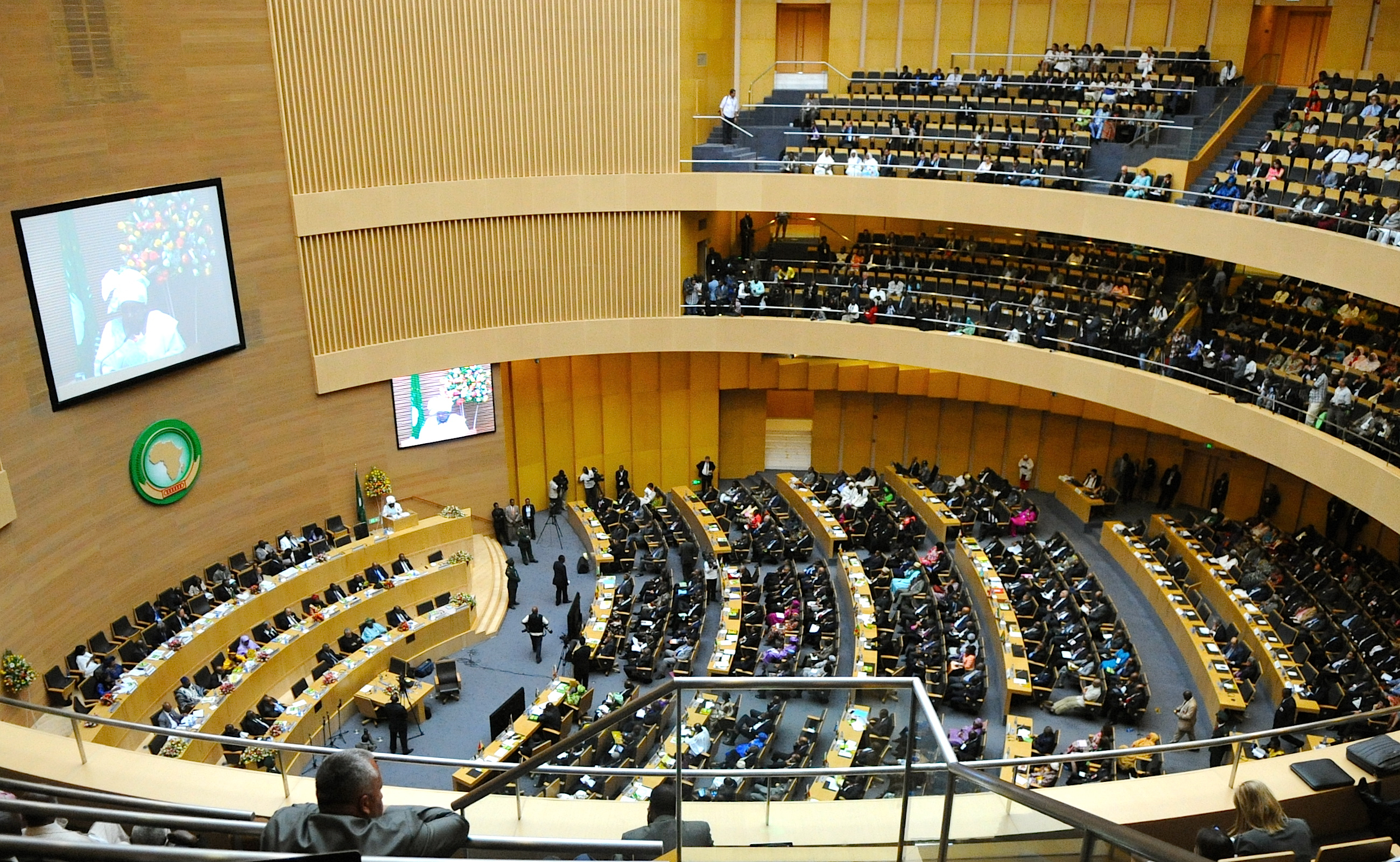
Representation has a room
February 2024: a continental voice needs a working mandate
The AU’s February 2024 decision on participation specified representation by its current chair, assisted by the chairperson of the Commission, and welcomed South Africa’s offer to share experience from its existing G20 membership. These arrangements addressed a practical problem: a continental institution needed a way to turn membership into sustained participation. Leadership, institutional support and accumulated knowledge had to be connected. [4]
Africa is not a single negotiating preference. Governments differ over energy, debt, trade, security and the balance between immediate financing needs and longer-term reforms. The AU’s task is to construct positions with sufficient authority and specificity to be useful. A common statement that suppresses every disagreement may be easy to endorse but difficult to bargain over.
Capacity matters before leaders meet. Officials must read technical papers, compare options, draft proposals and maintain relationships across working groups. They also need a route back to member states when compromises emerge. Without that connection, a representative may be visible at the summit while lacking the mandate to make an agreement that others can implement.
Britain can help most credibly by treating African proposals as substantive negotiating positions. Technical cooperation is useful when it strengthens the partner’s ability to develop and defend its own choices. It is less convincing when expertise is offered only to secure acceptance of a preselected British answer. The test of equal partnership is whether the other side becomes better able to disagree effectively as well as to cooperate.
August 2024: Security Council reform exposes the harder bargain
The AU’s common position on Security Council reform, adopted in 2005 and reiterated in a May 2024 consultation, seeks at least two permanent African seats with the privileges of permanent membership, including the veto, and a total of five non-permanent African seats. This is a claim about the distribution of authority, not merely a request for more invitations to speak. It makes the meaning of equal standing explicit. [5]
On 12 August 2024, Britain’s Minister for Africa and the UN, Lord Collins, called for expansion in both membership categories and permanent African representation as a matter of urgency. The statement recognised African expertise and the inadequacy of existing representation. It did not, by itself, settle the number of seats, their selection or the privileges that new permanent members would exercise. Support for reform should not be reported as agreement on every element of the AU position. [6]
The institutional obstacle is substantial. Article 108 of the UN Charter requires amendments to be adopted by two-thirds of General Assembly members and ratified by two-thirds of UN members, including every permanent Security Council member. Britain cannot deliver reform alone. Equally, that constraint does not absolve it from specifying the arrangement it is prepared to support and helping build the necessary coalition. [7]
The English School dilemma is whether an institution can preserve legitimacy while retaining a hierarchy increasingly difficult to justify. Great-power management was intended to support order through special responsibility. When privileged participation becomes detached from effective responsibility or adequate representation, its legitimacy weakens. British support for African permanent membership acknowledges that problem.
A practical judgement should therefore track proposals and negotiations, rather than tally speeches. Does Britain help narrow differences over an actual model? Does it support African participation in drafting and agenda-setting while formal reform remains blocked? These are intermediate tests of seriousness. Until the institutional bargain changes, declared support is diplomatically useful but materially incomplete.
Representation meets practical negotiations
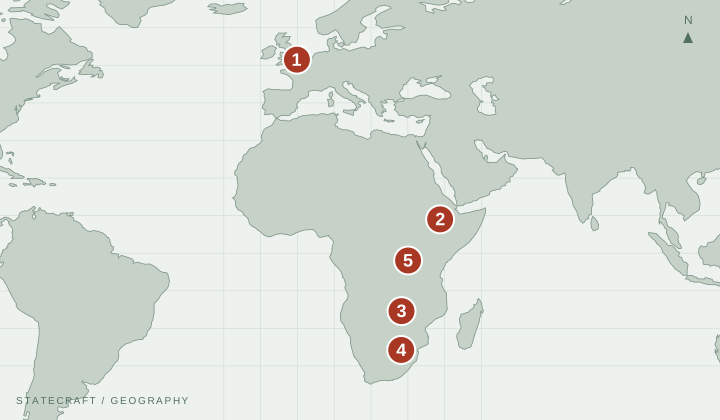
- London
British policy and English-law debt contracts influence the bargaining environment.
- Addis Ababa
African Union headquarters: continental representation and common positions.
- Lusaka
Zambia’s debt negotiations test the move from agreement to relief.
- Pretoria
South Africa’s energy transition requires finance and domestic implementation.
- Kigali
The Rwanda asylum partnership brought legal scrutiny to Britain’s diplomacy.
Zambia, 2023–24: agreement has a long route to relief
Debt restructuring offers a more concrete test of international cooperation. On 22 June 2023, the IMF welcomed Zambia’s agreement with its official creditors under the G20 Common Framework. It specifically thanked China and France as co-chairs of the official creditor committee and South Africa as vice-chair. This was a negotiated outcome requiring cooperation across geopolitical divisions. Britain should not be assigned leadership of that committee or credited with a settlement brokered by others. [8]
The process continued after the initial agreement. The IMF’s June 2024 review recorded a deal with Eurobond holders on 25 March and settlement of the bond exchange on 11 June. It also described work to implement the official-creditor memorandum through bilateral agreements. These stages show why a headline announcing agreement does not mean every component of a restructuring is already complete. [9]
The diplomatic mechanism is coordination among creditors with different contracts, incentives and institutional positions. One group may hesitate to grant relief if another is expected to benefit without comparable concessions. The debtor needs an arrangement compatible with financing and recovery, while creditors seek assurances about treatment and repayment. Delay is therefore more than administrative inconvenience: it prolongs uncertainty over resources available for public policy.
The G20’s relevance is that it provides a framework in which these differences can be addressed. AU membership may improve the representation of debtor concerns within that wider debate, but Zambia’s 2023 agreement preceded the AU’s admission. It would be wrong to claim the new seat caused that outcome. The better question is whether participation can help future processes become faster, more predictable and more responsive to development needs.
For Britain, the case demonstrates that cooperation with China and African governments can be necessary even amid strategic disagreement elsewhere. Debt policy cannot be reduced to a contest over which external power is more benevolent. The terms, timing and distribution of relief are the evidence that matters to the country trying to restore room for economic choice.
Britain’s own jurisdiction is part of the debt problem
The International Development Committee argued in 2023 that the prominence of English law gave Britain particular scope to influence private-creditor participation in restructuring. It called for consultation on legislation that could compel or incentivise participation. This moved the debate from statements at international meetings to a practical question within British political authority: whether existing legal arrangements adequately supported orderly relief. [10]
The government rejected that recommendation in its response published in June 2023. It favoured engagement with creditors and contractual approaches, including majority-voting provisions in syndicated lending, rather than the proposed legislative consultation. This is a substantive policy difference, not evidence that Britain had no debt policy. Ministers chose a route they considered compatible with functioning credit markets and improved restructuring. [11]
The competing arguments deserve to be stated fairly. Stronger legal intervention may reduce holdout incentives and make relief more effective. It may also raise concerns about financing costs, contract predictability or movement into other jurisdictions. A contractual approach can preserve market familiarity, but may work slowly and leave existing debt arrangements untouched. The judgement turns on evidence about actual restructuring performance and borrower consequences.
From an African perspective, the credibility of British reform language depends partly on willingness to examine those domestic trade-offs. It is easier to ask other creditors to change than to reconsider advantages embedded in one’s own financial system. Britain’s international influence is potentially valuable precisely because its courts, markets and institutions have practical reach.
The outcome cannot be measured only by the number of consultations convened. Useful tests include the time taken to conclude restructurings, participation by different creditor groups and the resources left for recovery. The legitimate interests of future borrowers also matter. An evidence-based approach should compare those consequences rather than assume that either legislation or voluntary cooperation is inherently sufficient.
November 2021: South Africa negotiates the terms of transition
At COP26 in November 2021, South Africa and an international partnership comprising Britain, France, Germany, the United States and the EU announced a Just Energy Transition Partnership. The initial ambition was to mobilise approximately $8.5 billion over three to five years through a mix of instruments, potentially including grants, concessional loans, guarantees and private investment. It was a financing commitment subject to further agreement and procedures, not an $8.5 billion grant already delivered. [12]
The political problem was larger than replacing one source of electricity with another. A transition affects energy reliability, employment, local revenue and the prospects of communities connected to coal. International support can help widen the choices available to a government, but conditions that ignore those consequences risk undermining both legitimacy and implementation.
South Africa’s investment plan, discussed with partners at COP27 in November 2022, gave the process a more concrete programme across electricity, electric vehicles and green hydrogen. The joint statement placed Britain’s contribution within the wider package. This sequencing matters: an initial political bargain was followed by a plan through which financing could be matched to national priorities. It did not eliminate disagreement over instruments, sequencing or who would bear the costs. [13]
An English School reading sees a bargain over responsibility. States with greater financial capacity offer support for a transition whose benefits extend beyond South Africa, while South African institutions retain responsibility for domestic decisions. The quality of that bargain depends on whether support expands feasible choices rather than merely transferring risk to the recipient.
For Britain, the partnership provided a role joining finance, climate diplomacy and technical cooperation. Its success needed to be measured through projects and social consequences after the announcement. A large pledged total can conceal very different terms. A loan, a guarantee and a grant all have uses, but they place different obligations on the government and different risks on the public.
November 2024: implementation becomes visible—and contested
The partnership’s November 2024 update identified Britain as chair of the International Partners Group and recorded specific institutional developments. South Africa’s transmission company began operating on 1 July, and a funding platform launched in October to match eligible projects with finance. The same update acknowledged a decision to delay the planned closure of three coal plants until March 2030 for energy-security reasons. Progress and constraint appeared in the same official account. [14]
These developments establish more than continued diplomatic enthusiasm. Institutions and mechanisms were being put in place through which transition projects could proceed. They do not establish that all projected emissions reductions or employment benefits had been achieved. Nor does the postponement of closures alone settle whether the wider transition was failing: energy security, replacement capacity and the sequencing of investment had to be assessed together.
The analytical question is whether international support helped South Africa manage these trade-offs more effectively. Britain’s chairing role gave it responsibility for coordination, but domestic authorities, firms, workers and communities remained central actors. Attributing the whole transition to external finance would understate that agency and overstate what the partnership could control.
Justice within a transition also requires attention to distribution. A project can increase national capacity while leaving a particular community without an adequate alternative livelihood. The appropriate evidence therefore includes who obtains training, jobs and reliable services, alongside financial allocations and emissions. Representation at a global summit gains material meaning when the resulting arrangements give affected people a credible place in decisions that reshape their lives.
From a finance pledge to institutions
South Africa’s Just Energy Transition Partnership · Selected milestones
Britain and partners announce a package combining grants, loans, guarantees and private investment.
South Africa sets out how the transition should connect finance, infrastructure and a just transition.
The new company starts as a wholly owned Eskom subsidiary; wider unbundling remains to be completed.
The platform seeks to match eligible projects with funders.
Rwanda, 2022–24: partnership meets legal scrutiny
Britain’s asylum partnership with Rwanda presented a very different use of diplomacy. Under the arrangements agreed in April 2022, certain people claiming asylum in Britain were to have their claims determined in Rwanda. On 15 November 2023, the Supreme Court upheld the conclusion that the policy was unlawful because there were substantial grounds to believe those transferred would face a real risk of refoulement: removal onwards to a country where they would face prohibited ill-treatment. The ruling concerned the arrangements and evidence before the Court, not an immutable judgement about a country. [15]
The Conservative government responded with a new treaty and the Safety of Rwanda Act, which took effect in April 2024.[16] The incoming Labour government then ended the partnership. The National Audit Office’s October 2024 overview recorded £290 million paid directly to Rwanda and the government’s decision to terminate the scheme. That figure should not be confused with every administrative or legal cost associated with the policy. [17]
The case complicates easy stories about British power. Rwanda was a negotiating party that pursued an agreement with London, rather than a passive recipient of a British instruction. At the same time, agreement between governments did not resolve the rights of the individuals whose lives the policy would affect. Sovereign consent and protection of people are different requirements.
For an English School analyst, this is the tension between an order of states and obligations extending beyond their consent. A diplomatic assurance has value, but its practical reliability must be examined where individual safety depends on it. Britain’s claim to uphold international law is strengthened when its arrangements withstand that examination, not merely when a partner government signs them.
The reversal also illustrates the cost of a relationship tied closely to a contested domestic political project. Resources and diplomatic effort can be committed before a scheme’s legal and political durability is established. That is a caution about the design of this particular partnership, not an argument against cooperation with Rwanda or against African governments exercising their own bargaining agency.
Aid choices and the test of a more equal relationship
Britain’s February 2025 decision to reduce aid spending to 0.3 per cent of gross national income in 2027, to finance higher defence spending, created another test of its priorities. ICAI’s March 2026 review examined the management of the aid target and set that decision against earlier reductions and budget volatility. The decision was a future spending path, not evidence that every individual African programme had already suffered an identical cut. [18]
The strategic choice can be explained: ministers regarded increased defence capacity as urgent. Its diplomatic cost should also be acknowledged. Partners judging Britain’s reliability experience development commitments through predictable finance and continuing relationships. Representation reforms may improve standing, but they cannot substitute for resources withdrawn from other forms of cooperation.
These cases produce a differentiated verdict. Britain constructively supported the AU’s G20 membership and contributed to a substantive energy-transition partnership. Its support for Security Council reform remained short of a completed institutional bargain. Debt policy exposed a contested choice over domestic legal instruments. The Rwanda episode and aid reductions showed how British internal priorities could reshape external partnerships.
The route to a more equal relationship is therefore practical and political. Britain should engage African proposals early, explain the terms of finance clearly and assess the effects of decisions within its own jurisdiction. African institutions, governments and communities must be able to shape the resulting choices. A seat makes that work more possible. Its lasting value appears when participation changes what can be decided, funded and delivered.
Sources & notes
- African Union — Assembly report recording G20 admission on 9 September 2023 ↗Back to the essay ↑
- James Cleverly — Multilateral reform speech, 29 June 2023 ↗Back to the essay ↑
- African Union — Assembly decision commending Macky Sall’s G20 initiative, February 2023 ↗Back to the essay ↑
- African Union — Modalities for G20 participation, February 2024 ↗Back to the essay ↑
- African Union — Consultation on the common position on UN reform, 24 May 2024 ↗Back to the essay ↑
- Lord Collins — UK statement on African Security Council representation, 12 August 2024 ↗Back to the essay ↑
- United Nations — Charter, Article 108: amendment requirements ↗Back to the essay ↑
- IMF — Zambia’s official-creditor agreement, 22 June 2023 ↗Back to the essay ↑
- IMF — Zambia review recording the 2024 bond agreement and exchange, 26 June 2024 ↗Back to the essay ↑
- International Development Committee — Debt relief and British legal responsibility, 8 June 2023 ↗Back to the essay ↑
- UK government — Response to debt-relief recommendations, June 2023 ↗Back to the essay ↑
- South Africa and international partners — Initial energy-transition declaration, November 2021 ↗Back to the essay ↑
- South Africa and international partners — Investment plan joint statement, November 2022 ↗Back to the essay ↑
- Just Energy Transition Partnership — Leaders’ implementation update, 27 November 2024 ↗Back to the essay ↑
- UK Supreme Court — Rwanda policy judgment, press summary, 15 November 2023 ↗Back to the essay ↑
- UK legislation — Background to the Rwanda treaty and Safety of Rwanda Act, 2024 ↗Back to the essay ↑
- National Audit Office — Home Office overview 2023–24, published October 2024 ↗Back to the essay ↑
- ICAI — Management of the aid spending target, March 2026 review ↗Back to the essay ↑
This is an analytical essay, grounded in the dated developments and official positions above. Interpretations and illustrative scenarios are distinguished from reported events. Drafted with AI assistance. Maps and evidence graphics: Statecraft. Documentary photographs are dated and credited individually. Read our editorial approach.